Books on RAWA and Afghan women
|
Bleeding Afghanistan: |
|
|
In the years following 9/11, U.S. policy in Afghanistan has received little scrutiny, either from the media or the public. Despite official claims of democracy and women’s freedom, Afghanistan has yet to emerge from the ashes of decades-long war. Through in-depth research and detailed historical context, Sonali Kolhatkar and James Ingalls report on the injustice of U.S. policies in Afghanistan historically and in the post-9/11 era.
Drawing from declassified government documents and on-the-ground interviews with Afghan activists, journalists, lawyers, refugees, and students, Bleeding Afghanistan examines the connections between the U.S. training and arming of Mujahideen commanders and the subversion of Afghan democracy today. Bleeding Afghanistan boldly critiques the exploitation of Afghan women to justify war by both conservatives and liberals, analyzes uncritical media coverage of U.S. policies, and examines the ways in which the U.S. benefits from being in Afghanistan.
|
|

|
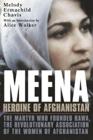
Meena - Heroine of Afghanistan |
|
|
KIRKUS REVIEWS , July 1, 2003: Timely biography conscientiously detailing the brief but courageous life of the young woman who founded the Revolutionary Association of the Women of Afghanistan (RAWA). Chavis (Altars in the Street, 1997) read up on Afghanistan's turbulent history, talked to people who knew Meena, and visited Afghanistan after the Taliban fell in order to fashion this account. Born in Kabul in 1957, Meena contracted typhoid at 12 and nearly died; for the rest of her life she was subject to seizures and weakness in her limbs. Her illness made the already sensitive girl more serious, particularly aware of the plight of women. Though Meena's mother was illiterate, she and her architect husband insisted that their daughter be educated. At an elite school founded by the French, Meena was a good student who enjoyed her classes and outstanding teachers, one of whom would later join her cause. Chavis deftly details the politically volatile background - the coup that ended the monarchy, the authoritarian republic, the brutal Russian occupation, and their equally harsh Taliban successors -as she chronicles Meena's decision while at college in 1977 to found RAWA. Determined to help Afghan women, most of whom were illiterate and without any legal rights, Meena and her supporters wanted RAWA to work for both democracy and social justice, objectives that became increasingly difficult and dangerous to achieve as the political situation worsened. Meena married a doctor, who was also political active, and bore a daughter and later twins, but they were often forced by the political situation to live apart; in 1986 he was tortured and killed by fundamentalists. Meena eventually fled to Pakistan, where she continued RAWA's work in the refugee camps, making the organization internationally famous. Threatened by her popularity, her opponents had her abducted and killed in 1987. A vivid celebration of a contemporary heroine. (Agent: Ann Rittenberg) Nawal El Saadawi, author of A Daughter of Isis and Walking Through Fire: This is an interesting and useful account of the struggle waged by a young Afghan woman against religious fundamentalism in Afghanistan. The United States government encouraged and supported the Taliban and Osama Bin Laden in the struggle to 'contain' Soviet expansion for a number of years. Meena was a victim of religious fundamentalism, but also of big power interests. Bettina Aptheker, professor and chair of the Women's Studies Department at the University of California Santa Cruz: Melody Ermachild Chavis has written a deceptively simple, clear, and absolutely stunning portrait of a selfless revolutionary and of the organization of the Revolutionary Association of the Women of Afghanistan, which she founded. Meena inspires, humbles and haunts us. Ultimately, Meena compels us to act - for peace and justice, for democracy, and, above all, for the liberation of women. Please read this book. It is a gift from the women of Afghanistan to the women of the world. Shailja Patel, poet: "I don't want to read it," was my gut reaction, when performance artist, Canyon Sam, told me about the newly released biography of Meena, founder of RAWA (Revolutionary Association of Women of Afghanistan). "I don't want to hear more horrors and feel even more despair than I already do over the oppression of women in our world." Feeling guilty about my avoidance, I picked up the book, intending to flip through as quickly as possible - and found myself riveted. Melody Chavis has pulled off an amazing feat. She takes us through the history of the world's most oppressed women - and manages to leave us inspired. She walks us through the life of a woman who endured unbelievable hardships, devastating defeats, traumas and tragedies - and we emerge filled with hope. Meena's battles for the women of Afghanistan blaze with determination, energy and humor. "Turn your grief into positive energy," she tells her comrades as they, and she, mourn the terrible news that Meena's husband has been captured and murdered. Despite Meena's superhuman achievements, she never comes across as idealized. Chavis portrays a profoundly human woman, whose personal suffering, struggles and failings fuel her extraordinary leadership. Meena is Everywoman, who, in the face of the greatest oppression women have suffered anywhere on the planet, transcends individuality to embody every woman's battles. For those who seek to understand how Afghanistan came to its present plight, this book is also an excellent history of the country in the 20th century. The account of the Soviet occupation and the rise of fundamentalist totalitarianism carries important lessons for all global movements for secular democracy, human rights and self-determination. Meena's tragic death by assassination, at the age of 30, could easily have meant the collapse of the organization she founded. That RAWA is still robustly alive, and continues to be the voice of Afghani women across the globe, is a testimony to her legacy of empowerment. All proceeds of the book will go to fund RAWA projects. Perhaps the relevance of Meena's life to all of us today is best summed up in a quote from Alice Walker's preface to the book:
"Dare to show up. Dare to be present in your time. Above all, dare to offer
the word of praise and encouragement that delights the heart."
This book is warm and enduring. It is eye-opening. It is a true human interest story. This is what reporters should be reporting on. Not Michael Jackson, or Martha Stewart or anything else. I would read this book again and again and again if I had the time.
Reading Meena inspires hope: While I saw Oprahs show about RAWA and the plight of the women of Afghanistan and did NOTHING (oh, I gave a small donation) Melody Chavis saw the same show, raised the money, found an interpreter, got on a plane, flew to Kabul and FOUND Meenas many close associates and family...then flew home to write a compassionate, terse account of this brave Afghan womans all too brief life. As with all great achievers, Meena had a singular sense of mission from a very young age. In her thirty years of living she accomplished her goal of creating a cohesive network of women (and men) working to re-create civilized society in Afghanistan. To do this Meena had to be a cross between James Bond and Mother Teresa. Theres no doubt in my mind that she has,now, been canonized by God (Allah) as "Saint" Meena. From the nucleus of her first contact with another woman, outside her immediate family, to RAWA becoming an "in your face" worldwide force Meena/RAWA is proof of the adage "two and two and fifty make a million". Today this movement (Revolutionary Association of the Women of Afghanistan) has hospitals, schools to educate children in concepts of equality and democracy as well as the three "R"s, and programs for the countless widows/orphans of Afghanistan. Meenas story, too, explains events of the past 35 years which have created todays volatile political climate. The Talaban did not spring to light from a vacuum. By reading this little gem you will finally "get it"! Your "how coulds" and "whys" are answered through Melody Chavis non-wordy eloquence. As an American woman with a strong desire to "know", as a retired teacher concerned for future generations...I strongly recommend reading MEENA for anyone over the age of 13 and would like to see it purchased by middle/high schools and colleges nationwide.
This book was the first time Id heard of Meena and RAWA. I feel that between its pages, I found and then lost a true heroine. The book is easy to read and tells of the tremendous struggles, sacrifice, courage, and generosity of Meena and the other members of RAWA. It also puts everything in historical context. It could easily be read by a young teen and it should be. This book makes its readers aware in detail of the misery and injustice that is being born by so many. It tells of the struggle within each and every day of their lives. This cause must be the next "Tibet". Please read the book. Inform yourself and then go to the RAWA website and do what you can to help. |
|


|
With All Our Strength: |
|
|
Book Description (from Amazon.com):
With All Our Strength
is the inside story of this women-led underground organization and their fight for the rights of Afghan women. Anne Brodsky, the first writer given in-depth access to visit and interview their members and operations in Afghanistan and Pakistan, shines light on the gruesome, often tragic, lives of Afghan women under some of the most brutal sexist oppression in the world.
About the Author: Anne E. Brodsky is Assistant Professor in the Department of Psychology and Women's Studies at the University of Maryland, Baltimore County. She is an expert on women and resiliency. Her accounts of RAWA have appeared in the The Washington Post and In These Times and she has been working with RAWA for more than two years. Publishers Weekly, March 24, 2003: The Revolutionary Association of the Women of Afghanistan came to Western attention in the wake of the fall of the Taliban, but its history long predates the Taliban. In 1977, in an environment hostile to women's rights and secularism, a 20-year-old woman named Meena founded RAWA to empower Afghan women and promote democracy in Afghanistan (in 1987, Meena was murdered by RAWA's opponents). Community psychologist Brodsky's groundbreaking account studies this important organization's evolution from an 11-member student group to the most powerful voice for women in Afghanistan, with thousands of volunteers. Heavily sprinkled with perceptive interviews, the book relays RAWA's story through the voices of its members and supporters, skillfully bringing to life those whose sacrifices have sustained the organization. The first writer with in-depth access to RAWA, Brodsky writes a passionate narrative of an organization ! that has helped its members overcome illiteracy, abuse, war and death. As Brodsky intends, RAWA emerges as a highly successful model of the resilience that, Brodsky believes, can empower women everywhere. Although RAWA's incredible story keeps the reader engaged, the book is occasionally repetitive. Brodsky also inadequately addresses one of the most fascinating aspects of RAWA--the clandestine manner in which the organization grew into a sophisticated transnational organization without infrastructure and designated leaders. However, her work stands out as a lone and important study of a remarkable organization that has transcended war, misogyny and fundamentalism and spread its message of Afghanistan's horrific history and its current reconstruction. Arundhati Roy: Here is a testimony to RAWA - Afghanistan's real democrats. After the recent farce about the "liberation" of women (Do we really believe we can bomb our way to a feminist paradise?) - the old jehadis are back at the helm, Sharia law is alive and well, and RAWA is as crucial to Afghanistan's future as it ever was.
Anne Brodsky's book gives us a ring side view of this extraordinary women's
movement that is as doggedly committed to the business of democracy as it is
to the (vital) business of dreaming of another, better world. Each of us
needs a little RAWA.
|
|

|
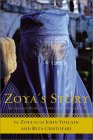
Zoya's Story: An Afghan Woman's Battle for Freedom |
|
|
Book
Description (from Amazon.com) Zoya's Story is a young woman's searing account of her clandestine war of resistance against the Taliban and religious fanaticism at the risk of her own life. An epic tale of fear and suffering, courage and hope, Zoya's Story is a powerful testament to the ongoing battle to claim human rights for the women of Afghanistan. Though she is only twenty-three, Zoya has witnessed and endured more tragedy and terror than most people do in a lifetime. Zoya grew up during the wars that ravaged Afghanistan and was robbed of her mother and father when they were murdered by Muslim fundamentalists. Devastated by so much death and destruction, she fled Kabul with her grandmother and started a new life in exile in Pakistan. She joined the Revolutionary Association of the Women of Afghanistan, which challenged the crushing edicts of the Taliban government, and she made dangerous journeys back to her homeland to help the women oppressed by a system that forced them to wear the stifling burqa, condoned public stoning or whipping if they ventured out without a male chaperon, and forbade them from working. Zoya is our guide, our witness to the horrors perpetrated by the Taliban and the Mujahideen "holy warriors" who had defeated the Russian occupiers. She helped to secretly film a public cutting of hands in a Kabul stadium and to organize covert literacy classes, as schooling-branded a "gateway to Hell" -- was forbidden to girls. At an Afghan refugee camp she heard tales of heartrending suffering and worked to provide a future for families who had lost everything. The spotlight focused on Afghanistan after the New York and Washington terrorist attacks highlights the conditions of repression and fear in which Afghan women live and makes Zoya's Story utterly compelling. This is a memoir that speaks louder than the images of devastation and outrage; it is a moving message of optimism as Zoya struggles to bring the plight of Afghan women to the world's attention. 50 percent of the proceeds from the sale of this audio book will be
donated to the Revolutionary Association of the Women of Afghanistan
(RAWA).
The book is coming out so far in eight countries: Germany, USA, Holland, Italy, UK, Denmark, Poland and Portugal.
- from Kirkus Reviews:
ZOYA'S STORY - A tale of struggle and suffering under the Taliban and their predecessors, from a courageous freedom fighter who has become an international spokesperson for the Afghan people.
The woman who narrated this story to two journalists does not use her real name. She is a member of the Revolutionary Association of the Women of Afghanistan (RAWA), created in the 1970s to resist first the fundamentalist mullahs, then the Russians, then their successors, the mujahideen and the Taliban. "Zoya" wistfully recalls her childhood in Kabul, where her grandmother cared for her while her mother worked, often coming home exhausted late at night. In 1985, the year Zoya turned eight, her mother finally explained that it was her work for RAWA that kept her so busy. Soon Zoya was carrying secret papers in her backpack as she accompanied her mother on political work. She learned to lie about her mother's whereabouts and came to realize that, though her mother loved her, work came first. That realization signalled the end of her childhood: "I feel no sadness about this .. I wanted to grow up fast so that I could achieve something useful." After the Russians withdrew in 1989, the mujahideen began shelling Kabul and her parents disappeared, apparently killed. Mujahideen soldiers forcibly entered homes demanding that young women marry them; it was dangerous to be out on the streets, even for women in burqas. In 1992, RAWA arranged for Zoya and her grandmother to flee to Pakistan, where she attended a RAWA-run girls' school. When the Taliban took over, she began working in the refugee camps in Pakistan, returning only once (heavily disguised) to Kabul. She vividly describes Taliban atrocities, the grossly inadequate medical care for women (most female doctors fled), and the absurdity of wearing the cumbersome burqa, in which "something as mundane as eating ice cream became a ridiculous undertaking".
Timely and sobering.
- from the British magazine The Bookseller:
After 11 September the barbaric treatment of women in Afghanistan was brought to our attention. A refugee worker called Zoya has continually challenged the oppressive religious edicts and her struggle for freedom and basic human rights are portrayed in Zoya's Story by Zoya with John Follain and Rita Cristofari. It is a story of bravery, determination and love for a nation that has been treated deplorably and whose people daily live in fear for their lives. You hope the new government will make changes, but don't hold your breath.
- Melika Brown, The Times (April 20, 2002):
"If Romanian babies were the Nineties' pet cause, then oppressed Afghan women must be this decade's equivalent.
Zoya is a woman in her early twenties who would like us to think that she is
no more special than any other Afghan woman her age. Her story begins with
a vivid evocation of the heat and discomfort under her burka, as she crosses
the border into Afghanistan after a long absence, this time as a member of
RAWA, the Revolutionary Association of the women of Afghanistan. We then
see her as a four-year-old iin Kabul, where she comes face to face with a
female Soviet soldier - the enemy and occupier of her country.
The daughter of liberal Afghan parents, both of whom disappear before she
reaches her tenth birthday, Zoya describes everyday life in a safe house in
Kabul where girls are educated in secret, and live in fear under false
names, united by their aim to be free.
Once you accept that this is a book about RAWA and the brave work it carries
out, Zoya's Story becomes a fascinating document that catalogues the
misery-mongering by the Taliban. This book serves as a once-and-for-all
document of the past decade's events, and is brought brutally up to date
with Zoya's account of the events of September 11.
In parts slightly worthy, Zoya's Story is nevertheless an interesting read,
and for full impact, should be read now before it dates."
Booklist
After both her parents were killed by the predecessors of the Taliban, the Mujahideen, Zoya took up her mother's work in RAWA, the Revolutionary Association of the Women of Afghanistan and, with her grandmother, journeyed to Pakistan, where she could receive an education at a school run by RAWA. A few years later, Zoya returned to Afghanistan to help her people and get firsthand accounts of the horrors of the Taliban reign. Zoya herself witnessed public executions and amputations, but she also witnessed heartening displays of courage--women defying the Taliban by holding secret classes and shopping in the marketplace. Zoya remains skeptical about the future of Afghanistan after the Taliban, afraid that after the U.S. involvement ends, the Mujahideen will return to their old ways. A stirring memoir by an uncompromisingly brave woman.
Kristine Huntley
Publishers Weekly
Now 23, Zoya was a child during the Russian invasion and a teen when the Taliban took power. The daughter of activists in Kabul, Zoya was raised by her grandmother after her parents disappeared. She now belongs to RAWA (see the review of Veiled Courage, above), a group her mother belonged to. Her reflections show the complex scars made by the tug of war between factional governments and tribal warlords, especially the effects of the Taliban. Many of Zoya's stories (e.g., women only permitted to leave their homes wearing a burqa and accompanied by a male; women often suffering and dying for want of a female physician) are covered in Latifa's My Forbidden Face. Zoya tells of a society where kite flying, bright colors and even women's laughter is forbidden, and enforcers are often armed with Russian military leftovers or crude stones. Yet the Afghans Zoya speaks of remain rebellious and hopeful. She writes, "When I... saw Kabul in the daylight, even the mountains beyond the city which had seemed so peaceful to me when I was a child looked sad. But... that I had seen them again... made me feel stronger." Assigned by RAWA to live and work in a refugee camp near the Afghan-Pakistani border, Zoya now also travels abroad to raise funds for her organization. Her narrative voice is quiet and clear, making her recollections of the breathtaking violence she has witnessed nail-bitingly vivid and her descriptions of her struggle candid and poignant.
From AudioFile
Zoya committed her life to the cause of women's rights in Afghanistan at 14, when both parents were assassinated for political activities. Her life story is provocative; Zoya's position is predictably anti-Taliban, yet subtly anti-American. The reader's Afghani pronunciations sound rich and authentic, but comprehensible. Her vocal characterizations vividly paint Afghani widows exhausted by a lifetime of cruelty, as well as idealistic young women energized by revolutionary ideas of democracy. The reader's crisp voice doesn't succumb to undue sentimentality or political posturing. Unfortunately, the epilogue interview with Zoya is of poor technical quality, but it creates an image of her huddled in a safehouse, seeking both refuge and publicity for the cause. N.M.C. © AudioFile 2002, Portland, Maine-- Copyright © AudioFile, Portland, Maine --This text refers to the Audio Cassette edition.
|
|
|
Veiled Courage: Inside the Afghan Women's Resistance |
|
|
Book Description (Amazon.com)
In Afghanistan under Taliban rule, women were forbidden to work or go to school, they could not leave their homes without a male chaperone, and they could not be seen without a head-to-toe covering called the burqa. A woman’s slightest infractions were met with brutal public beatings. That is why it is both appropriate and incredible that the sole effective civil resistance to Taliban rule was made by women. Veiled Courage reveals the remarkable bravery and spirit of the women of the Revolutionary Association of the Women of Afghanistan (RAWA), whose daring clandestine activities defied the forces of the Taliban and earned the world’s fierce admiration. The complete subordination of women was one of the first acts of the Taliban. But the women of RAWA refused to cower. They used the burqa to their advantage, secretly photographing Taliban beatings and executions, and posting the gruesome pictures on their multi-language website, rawa.org, which is read around the world. They organized to educate girls and women in underground schools and to run small businesses in the border towns of Pakistan that allowed widows to support their families. If caught, any RAWA activist would have faced sure death. Yet they persisted. With the overthrow of the Taliban now a reality, RAWA faces a new challenge: defeating the powers of Islamic fundamentalism of which the Taliban are only one face and helping build a society in which women are guaranteed full human rights. Cheryl Benard, an American sociologist uses her inside access to write the first behind-the-scenes story of RAWA and its remarkably brave women. Veiled Courage will change the way Americans think of Afghanistan, casting its people and its future in a new, more hopeful light. Ahmad Rashid, author of Taliban: "For too long Afghan women have been depicted as merely the victims of war, repression and extremist ideologies. Now for the first time we hear the voices of those Afghan women who for years have silently stood up to oppression and resisted. Cheryl Benard has done a major service to Afghan women and women everywhere by letting us hear the caged birds sing. And enormously important book as the world sets out to help Afghanistan rebuild." Francis Fukuyama, Author of The End of History and The Last Man: "The war in Afghanistan that followed the September 11 attacks brought home to many people the fact that women's equality is central to the freedom that we enjoy in the modern world, and is not something to be taken for granted. This book traces the incredible courage of a group of Afghan women who struggled for the freedom long before the rest of the world learned to pay attention." MARGIE THOMSON (New Zealand Herald, June 26, 2002): Of the many books leaping into print about the plight of Afghanistan's women under the Taleban, this one is a stand-out - an astonishing collection of stories about women who dared to resist the vicious, fundamentalist regime. At a time when women were not even allowed to be schooled within their own homes, could not be tended by a doctor, and were not allowed out in the street unaccompanied by a male relative, the Revolutionary Association of the Women of Afghanistan (RAWA) organised secret literacy schools, healthcare, small businesses that allowed widows to support their families, a website on which they posted photographs they had secretly taken of Taleban beatings and executions - all at the risk of death. The organisation's founder, the legendary Meena, was an early martyr who nevertheless left a legacy of positive action that inspired thousands of others, men and women. It's an aspect of Afghanistan we don't often see, and undermines the myth of Afghan women's apparent acceptance of their low status. Benard, an aid worker and adviser to RAWA (*), makes the most of her many personal contacts to tell this fascinating and unexpected story. _____________ (*)- RAWA: We have no Afghan or foreign adviser, this is a wrong statement by the publisher of the book. When we asked Cheryl Benard about it, she wrote in an email to RAWA on June 17, 2002: “it also bothered me to be called an advisor, which I am not, and I always say that in interviews. Unfortunately I don't have control over those things.” |
|

[Home] [RAWA in the Media]